Requester and business owner
Explains the need, outcome, timing, and business context before a buying path is chosen.

Intake & Procurement
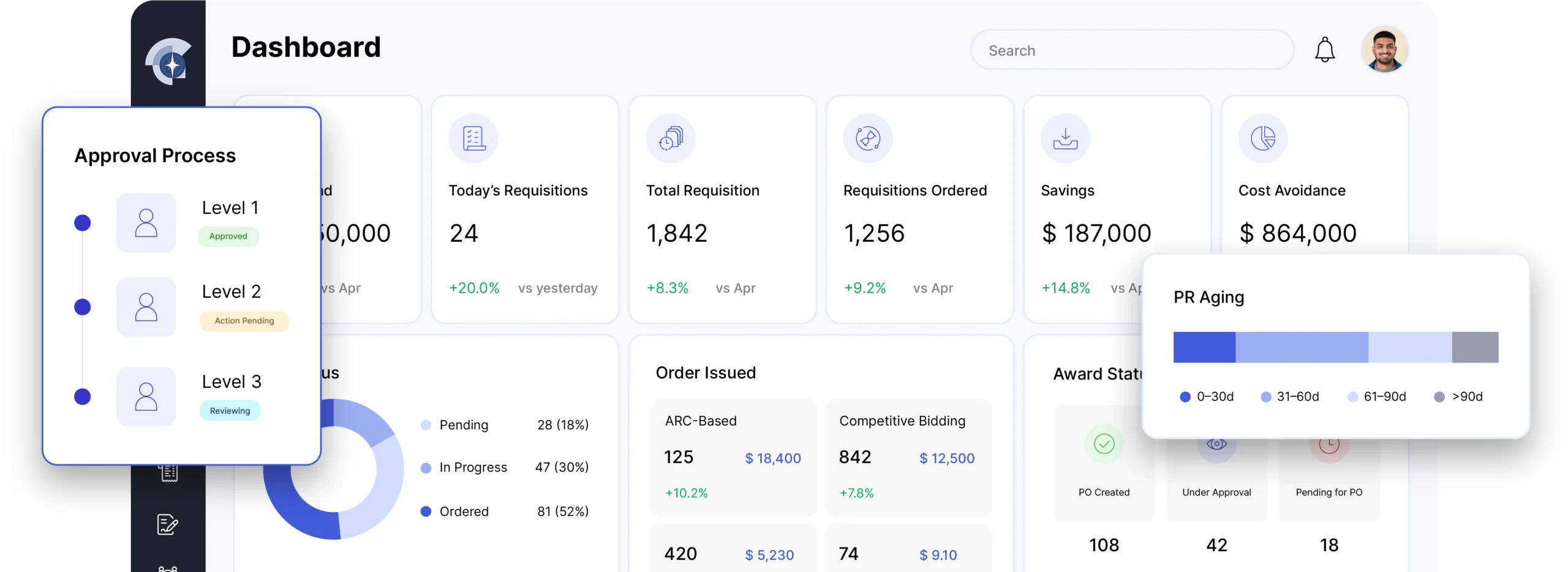
Connect business need, budget, policy, and approval in a single requisition path that is easy to follow.
Who this is for
Purchase Requisition Management is for enterprises where approvals slow down because the request, budget, policy, and business rationale are spread across systems or conversations.
Buyer lens
The buying question is not only whether this capability works. It is whether the right people can use it, govern it, and carry the context into the next step.
Why teams use it
A focused capability should remove uncertainty from the people doing the work while keeping the business rules and accountability intact.
 VendrNova
Invoice control
Updated just now · All entities
Invoices in flow
624
+12.4%
Matched
86%
This period
Exceptions
42
Assigned
Due soon
$310K
Next 14 days
Purchase order
PO-321654
Receipt
GR-8942
Invoice
INV-321654
Workflow before and after VendrNova
The value of a module is clearest when buyers can see how the work changes before, during, and after the handoff.
Before VendrNova
A requisition may exist, but the decision record is scattered across comments, attachments, and follow-up.
Approvers receive a description or amount without the context needed to understand the business need.
Budget, category, supplier, or policy questions move through email and delay the decision.
The purchase order or invoice contains the transaction, but not always the reasoning behind it.
With VendrNova
The request carries the detail needed to route, approve, create the commitment, and explain the decision later.
Collect the business purpose, items or services, supplier, timing, budget, and supporting evidence.
Route the right approvers with policy, entity, threshold, and financial context in view.
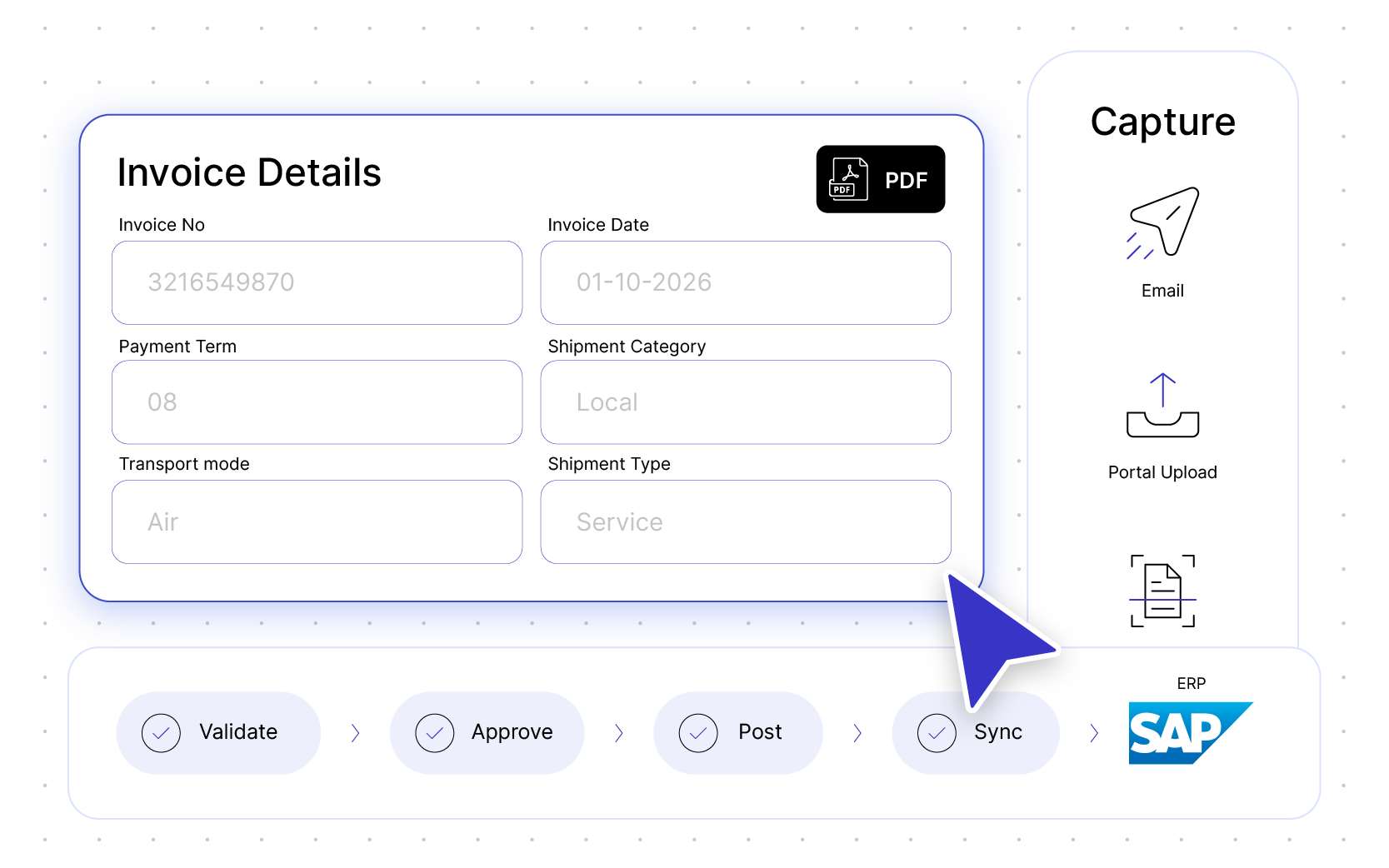
Create or update the downstream purchase record without forcing a second explanation.
Roles involved
Enterprise adoption improves when each stakeholder can see the part of the workflow they own and the context they need from the role before them.
Explains the need, outcome, timing, and business context before a buying path is chosen.
Triage demand, set the right route, and keep category and supplier context connected.
Reviews policy, budget, entity, and risk with enough detail to make a timely decision.
Maintains identity, master data, integration responsibilities, and the system-of-record boundary.
Integration, ERP, governance, and security
A commercial page should help the buying group understand what connects, what remains authoritative, and which controls need to be reviewed before rollout.
Requisition design should align request data with ERP account assignment, cost center, project, budget, supplier, material or service, tax, and approval data. Preserve the boundary between a rich request experience and the authoritative financial transaction.
Requisition controls should make approval authority, budget ownership, delegation, exceptions, and history clear. Review access and audit requirements for attachments, supplier information, and sensitive business context.
Implementation approach
Choose one requisition family with recurring approval friction. Agree the minimum complete request, route it through real approvers, validate the ERP handoff, and use exception patterns to refine the form.
Implementation principle
Start with the request paths people actually use.
Scope the workflow around the decision, data, owners, and handoffs that need to work after launch—not only the screens that need to be configured.
Identify request types, owners, decision points, and the off-channel work to replace.
Translate policy, category, entity, threshold, and risk into a guided path.
Test with representative requesters and approvers, then tune forms, rules, and handoffs.
Add adjacent buying paths once adoption, ownership, and downstream status are clear.
Customer evidence
Use the customer voice below as a starting point, then test the same workflow against your own systems, roles, controls, and priorities.
“VendrNova’s MIS dashboard gives us control and capability. We automated 80% of purchase orders and 95% of GRs, cut approval times from days to hours, and gained real-time visibility across our vendor network.”

Abhay Kulkarni
AVP PSM · TKIL Industries Pvt Ltd. (formerly thyssenkrupp Industries India Pvt Ltd.)
Relevant FAQs
Clear answers help procurement, finance, IT, security, and business stakeholders enter the same conversation.
Purchase requisition management organizes the request, review, approval, and handoff that happen before a purchase order or other commitment is created.
The right detail depends on the category, but usually includes business purpose, item or service, quantity, timing, supplier or source, entity, budget or account assignment, and supporting context for the approver.
Yes. The procurement workflow can gather and route context while the ERP remains authoritative for financial and transactional records. The handoff should be designed around the data each system owns.
Start by improving completeness at submission, routing to the correct approver, showing budget and policy context, and making exceptions and ownership visible instead of relying on follow-up.
Next step for Purchase Requisition Management
Bring one approval path with too many loops to VendrNova and see how the request, budget, policy, and downstream commitment can stay connected.