Procurement transformation owner
Defines the operating model, prioritizes workflows, and keeps the program tied to business outcomes.
Platform & Extension
Connect procurement workflows with ERP, finance, supplier, and analytics systems through a structured extension layer.
Who this is for
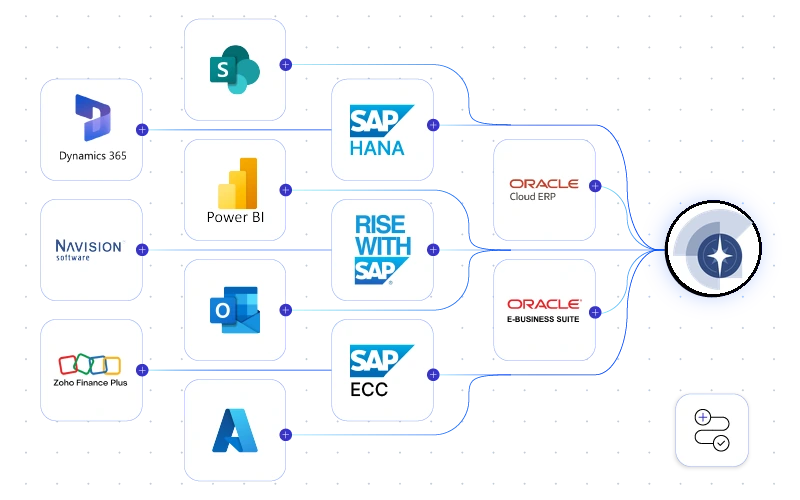
Integrations and APIs is for organizations that need procurement to exchange data with ERP, finance, identity, supplier, analytics, and other enterprise systems without creating duplicate ownership or fragile handoffs.
Buyer lens
The buying question is not only whether this capability works. It is whether the right people can use it, govern it, and carry the context into the next step.
Why teams use it
A focused capability should remove uncertainty from the people doing the work while keeping the business rules and accountability intact.
 VendrNova
Connected stack
Updated just now · All entities
Data flows
12
Active
ERP sync
99.2%
Healthy
Open handoffs
6
Assigned
Exceptions
14
In view
ERP
Healthy
Analytics
Healthy
Network
Review
Workflow before and after VendrNova
The value of a module is clearest when buyers can see how the work changes before, during, and after the handoff.
Before VendrNova
Teams keep systems moving through exports, spreadsheets, duplicate entry, and manual status checks.
The same supplier, entity, order, or invoice context is maintained in several places without a dependable authority.
A workflow moves between procurement, ERP, finance, supplier, and analytics systems with little visibility into status or failure.
A small process or integration change creates downstream surprises because dependencies are not mapped.
With VendrNova
Each system can remain good at what it owns while the workflow shows how data and decisions move across the landscape.
Decide which system owns each master, transaction, status, and approval outcome.
Use structured integration patterns, APIs, or events for the data and workflow handoffs that matter.
Monitor status, exceptions, ownership, and change so the connection remains dependable after launch.
Roles involved
Enterprise adoption improves when each stakeholder can see the part of the workflow they own and the context they need from the role before them.
Defines the operating model, prioritizes workflows, and keeps the program tied to business outcomes.
Translate intake, sourcing, supplier, contract, purchasing, invoice, and insight needs into workable rules.
Owns architecture, data exchange, identity, access, environments, and the system-of-record boundary.
Confirms control, investment, adoption, value, and the decisions that need to improve across the enterprise.
Integration, ERP, governance, and security
A commercial page should help the buying group understand what connects, what remains authoritative, and which controls need to be reviewed before rollout.
This module is about the integration architecture itself: ERP and finance systems, identity, supplier and contract records, analytics, APIs, structured exchange, and the responsibilities that keep each flow accurate and supportable.
Integration governance should cover authentication, least privilege, data minimization, environment separation, logging, failure handling, change control, monitoring, and ownership for every system boundary.
Implementation approach
Choose one high-value workflow and map the records, authority, interface, identity, error path, support owner, and acceptance criteria before connecting more systems.
Implementation principle
Sequence the operating model, not just the modules.
Scope the workflow around the decision, data, owners, and handoffs that need to work after launch—not only the screens that need to be configured.
Map systems, processes, ownership, pain points, controls, data responsibilities, and the first value case.
Prioritize one connected workflow with a clear boundary, measurable outcome, and executive owner.
Validate configuration, integration, roles, user acceptance, exception paths, and operational support.
Add adjacent workflows with the same governance, data, and adoption discipline.
Customer evidence
Use the customer voice below as a starting point, then test the same workflow against your own systems, roles, controls, and priorities.
“VendrNova's robust vendor management capabilities have helped us consolidate our supplier base while improving compliance documentation; critical for an organization operating under regulations. Onboarding new vendors, tracking approvals, and maintaining a clean audit trail used to be fragmented across emails and spreadsheets; now it’s all in one place. For any organization looking to bring rigor, speed, and transparency to their procurement function, I strongly recommend VendrNova.”

Sijo Jose
Head of IT & Digital Transformation · Welspun One Logistics Parks
Relevant FAQs
Clear answers help procurement, finance, IT, security, and business stakeholders enter the same conversation.
VendrNova is positioned as an extension layer around the systems of record that IT and finance already trust. The right pattern depends on the workflow, data ownership, interfaces, identity, and operating responsibilities.
The integration conversation can include ERP, finance, supplier, identity, and analytics environments. A fit discussion should confirm the specific landscape, data responsibilities, and workflow boundary.
Ownership should be shared explicitly across the process owner, IT or integration team, ERP or finance owner, security, and support roles. The workflow should show who handles data and process exceptions.
Cover system authority, data objects, direction and timing, authentication, access, error handling, monitoring, change management, support, testing, and the user or financial outcome the integration enables.
Next step for Integrations & APIs
Bring your ERP, finance, identity, supplier, and analytics landscape to VendrNova and map the first workflow worth connecting.